The Terms of the Fight
There is a story so old it has stopped being a story and become a reflex a shorthand we reach for whenever something small survives something large. A boy. A giant. A sling. We say the words David and Goliath and mean, simply, the improbable win. We have told it to each other so many times that we have stopped actually looking at it.
Look again.
The boy was not small in the way the story wants you to remember him. He was quick, unarmored, and armed with a weapon built for distance and the giant, for all his size, was built for a fight that never happened. He came prepared for a collision of mass against mass, the only kind of contest his strength had ever needed to answer for. The boy simply declined to have that contest. He chose the terms, not the size, and the terms were the whole battle.
I find I am less interested, these days, in the boy's courage than in his refusal. There is a particular kind of clarity that allows a person to look at the shape everyone assumes a fight must take, and simply say not here, not like this. It requires knowing, with some precision, what your own smaller shape is actually capable of, rather than mourning the larger shape it will never be.
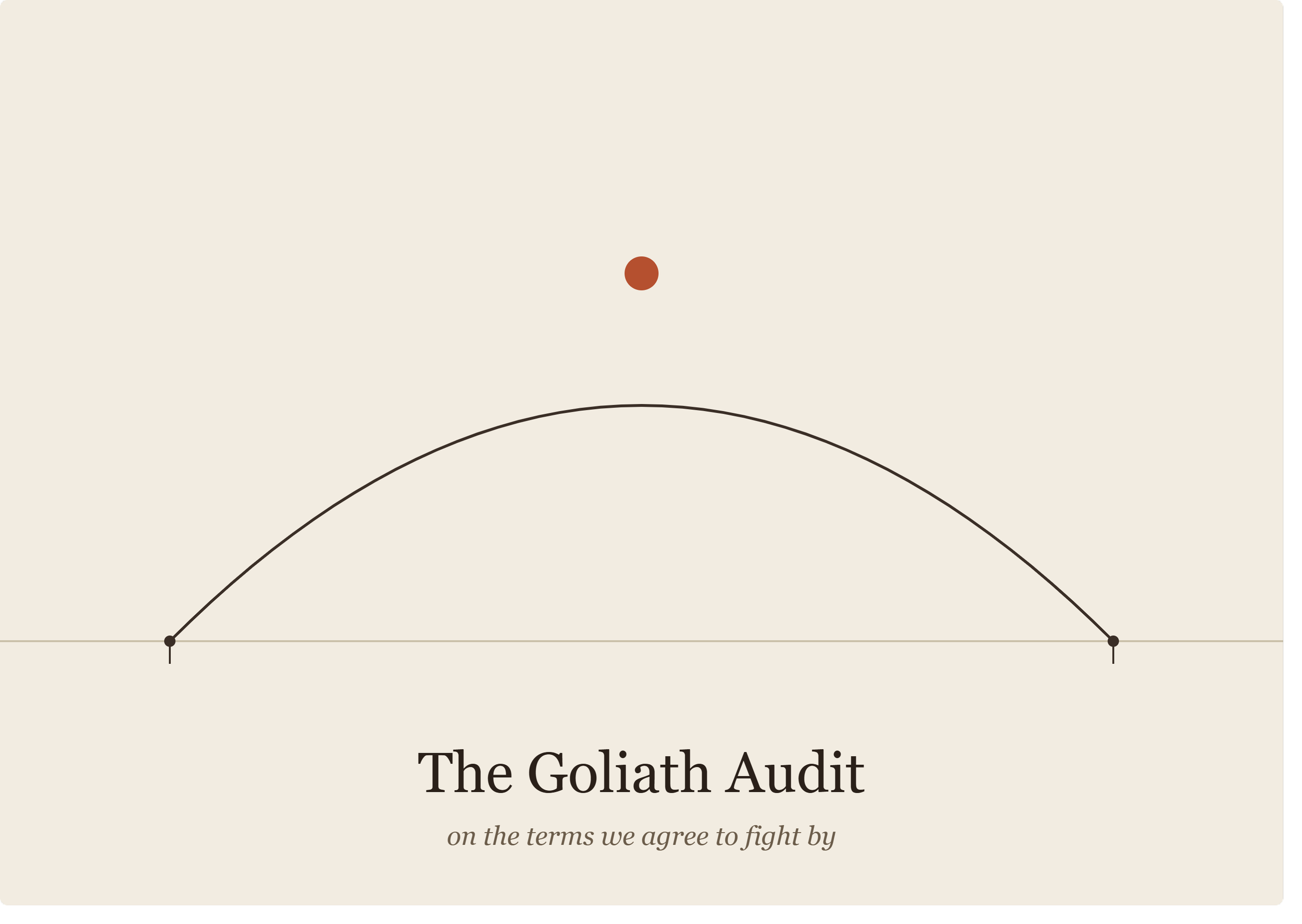
But the story, read closely, offers a second and colder truth, one that rarely survives the retelling. Strength is not a straight line upward. It bends. There is a point, quiet and easy to miss, past which more of a strength stops serving the one who holds it where size becomes slowness, where certainty becomes a kind of blindness, where the very thing that once made a person formidable begins, without any drama at all, to work against them. Goliath did not lose because he was weak. He lost because he never once asked whether his strength still matched the fight in front of him.
I think of this often how rarely we audit the parts of ourselves that are currently working. How much easier it is to interrogate what is missing than to question what is, for now, still succeeding. The boy on that field did both. He knew exactly what he lacked, and he knew, with equal precision, what the giant no longer had the eyes to see.
Perhaps that is the real inheritance of this old story not a lesson about winning, but a discipline of attention. To keep asking, long after the terms of a fight have been set by someone larger than you, whether those terms were ever really the only ones on offer.
WHAT THE HEADSET ACTUALLY TAUGHT ME
On the communication skills nobody credits BPO for — and why they show up in every room I have entered since.
I was not sure, in those early years, that any of it would matter.
I was young, navigating what a career looked like from the inside, and I had arrived in an industry most people treated as a corridor — a place you passed through on your way to somewhere more considered, more credentialed, more worth mentioning in rooms that took themselves seriously. I did not know then how foundational those years would prove to be. I know now, with the particular certainty that only accumulated evidence can produce.
Yes, the culture is different. Yes, the timings are something you negotiate with your body across night shifts and rotating schedules, and your body does not always concede gracefully. Yes, there are things about the industry that deserve honest examination. None of that is untrue.
But here is what is also true, and considerably less discussed: the skills that industry builds are among the most durable professional assets you will ever carry. And I say this not as a retrospective comfort, but as someone who has spent every year since drawing on exactly those assets in rooms that had no idea where they came from.
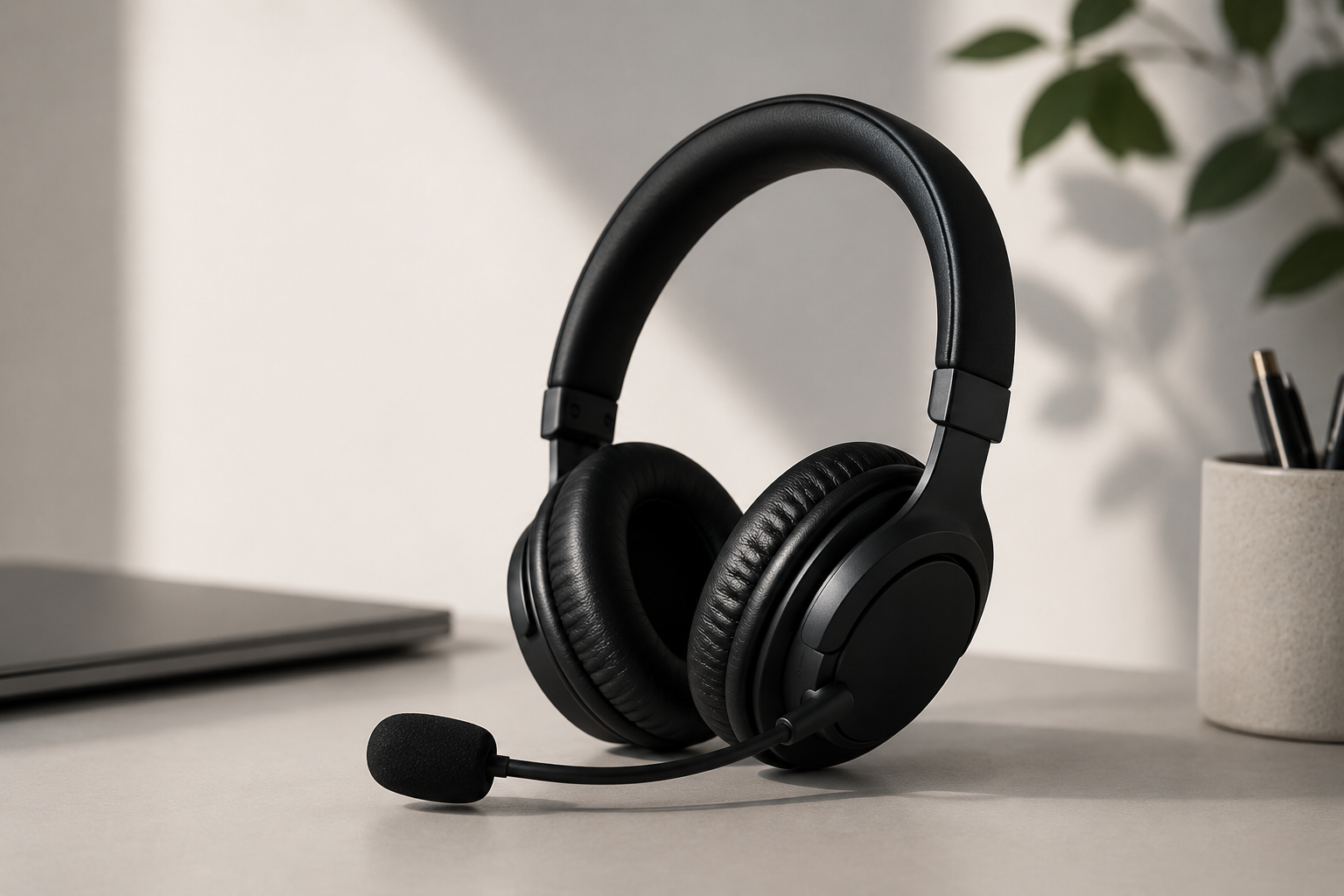
I started at the headset. I grew into quality analysis — building the process architecture behind the customer experience, auditing the gap between what was supposed to happen and what was actually happening, learning to read an organisation's health not from its reports but from the texture of its customer interactions. That progression — from executing to examining, from frontline to framework — shaped every professional instinct I now rely on.
But before the architecture, there was the training. And the training taught me something that no case study, no credential, and no corporate workshop has since managed to teach more effectively.
It taught me how to be real.
The finest trainers I encountered in those years were not teaching us to perform. They were teaching us to stop performing. To abandon the accent we had assumed a professional should carry. To resist the impulse to thank a customer six times in forty-five seconds as a substitute for actually helping them. To stop wrapping every difficult truth in so many layers of corporate warmth that the truth itself became unrecognisable by the time it arrived.
Say what you mean. Say it with clarity, with warmth, with the full weight of your competence behind it. And then stop talking.
It is not what you say. It is how you say it.
I heard that sentence more times than I can count in those years. I have spent every year since discovering the range of rooms it unlocks — how you deliver difficult news to a team member without dismantling the relationship in the process; how you enter a room where the energy is wrong and recalibrate it without announcing that you are doing so; how you hold a conversation that needs to be honest and a relationship that needs to survive the honesty simultaneously; how you know, at any given moment, precisely when to keep talking and when silence will do more work.
These are not soft skills. That phrase has always understated them. They are the hardest skills — the ones no simulation replicates, no certification confers, and no case study adequately prepares you for. They are learned in the specific, unglamorous, high-volume crucible of being fully responsible for someone's experience of a company, with nothing between you and that responsibility except your own voice and whatever you have built within yourself.
BPO is not a waiting room. For those who pay genuine attention inside it, it is one of the most rigorous schools of professional formation available. The timings are demanding. The culture asks a great deal. And the lessons — the real ones, the ones that compound quietly across years and surface unrequested in every room you subsequently enter — are permanent.
I was not sure, in those early years, that any of it would matter.
It built the foundation for everything that did.
On Keeping the Right Distance
Before you assume this is about social distancing, it is not. That ship has sailed, that phrase has been retired, and I, for one, am glad. This is about something far more personal, far more permanent, and considerably less discussed in government briefings.
This is about being an introvert.
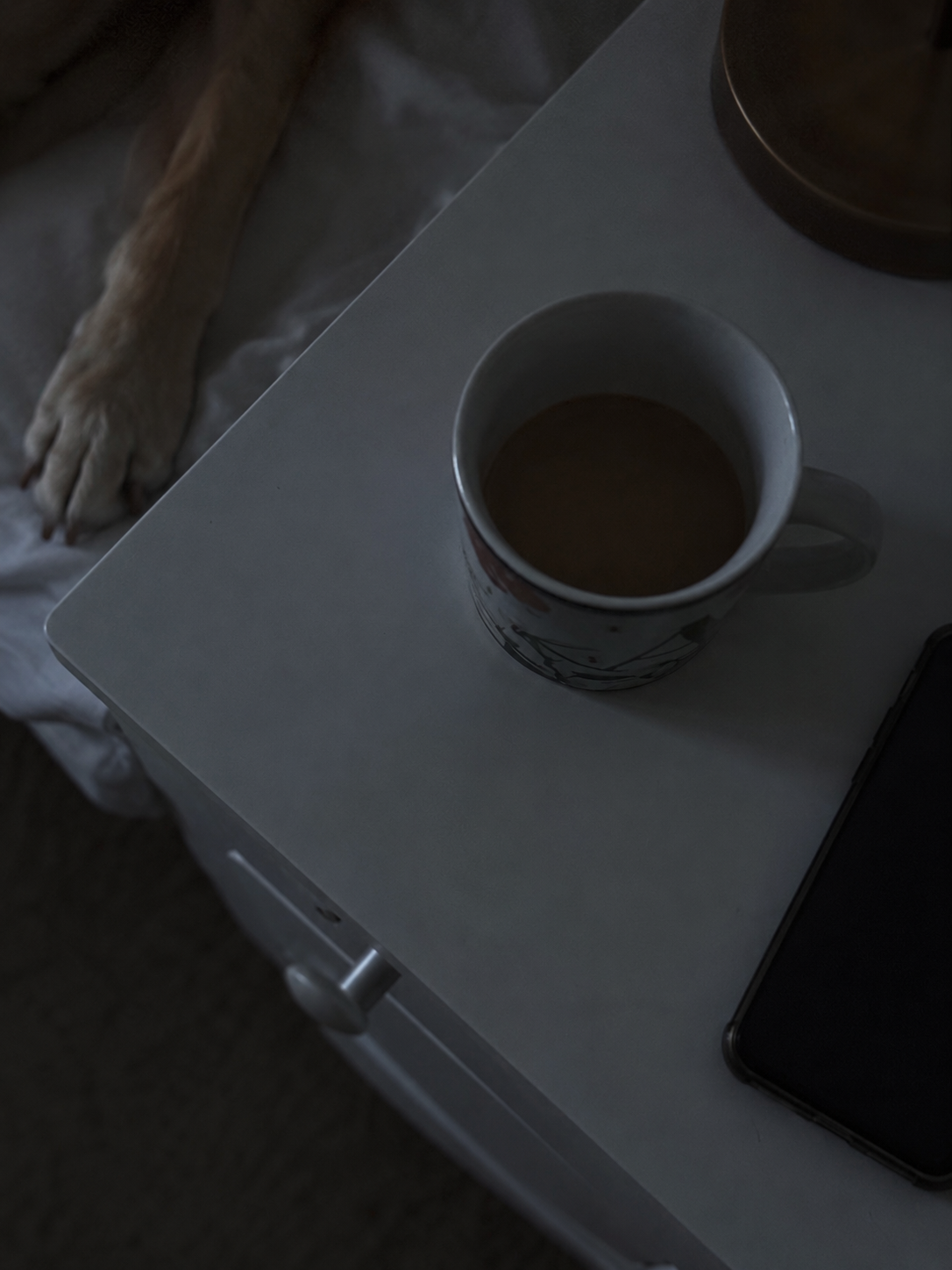
There is a specific thirty-minute window between when my alarm goes off and when anyone else in the house stirs. I know this the way I know the weight of a full kettle versus a half-empty one not consciously, just as fact. Thirty minutes. I use all of them. Not productively. Not scrolling. Not optimising my morning for peak performance. Just existing in the particular quality of a house that has not yet asked anything of me.
This is not insomnia. This is not ambition. This is maintenance.
I have been an introvert my entire life, which means I have spent my entire life explaining that introversion is not the same as shyness, not the same as antisocial behaviour, not the same as having nothing to say. It is, instead, a very particular relationship with energy where it comes from, where it goes, and how quickly it runs out when you spend a Tuesday being responsible for other people's moods. I manage a team of six. I am responsible, every single workday, for the emotional temperature of a room. I am also someone who needs thirty minutes of absolute quiet before she can be responsible for anything at all, including her own breakfast.
These two facts coexist. They do not resolve each other. I have made my peace with this, which took longer than I will admit here.
The architecture is the thing nobody tells you about. Not the introversion itself there are approximately eleven thousand books on that, and half of them have a cartoon of someone reading alone on the cover, which, yes, same but the careful, deliberate structure you build around it over the years. The distance you learn to keep. Not from people, exactly. From the parts of people that require too much, too fast, without warning. The spontaneous phone call. The "do you have a minute" that is never a minute. The open plan office. The team-building exercise where you are asked to share a fun fact about yourself and the only fun fact you can think of is that you would very much like to go home.
I know, for instance, exactly how close I can sit to a difficult conversation before I need to step back from it. I know the precise moment a work meeting shifts from productive to draining, usually somewhere around the forty-minute mark when someone starts circling a point they have already made twice and nobody is willing to say so. I know which colleagues need eye contact and which ones find it easier to talk while looking at a screen, and I adjust accordingly not because I was trained to, but because I have been paying attention to people since before I understood that paying attention was something I was doing. It is both a gift and an occupational hazard.
This is what introverts are actually doing in social situations, by the way. We are not being quiet because we have nothing to contribute. We are running an extremely active background process. Cataloguing. Calibrating. Deciding, in real time, how much to give and to whom and in what order of priority, the way a careful host silently tracks who needs a refill before they have had to ask. It is exhausting, it is involuntary, and we have genuinely never known how to turn it off.
The commute is where I do the math.
Somewhere between leaving home and arriving at work, I run the numbers on the day ahead. Not the meetings on the calendar those I can see coming. The invisible ones. The colleague who will need reassurance after a difficult email. The team member who has been quieter than usual this week and is probably about to tell me something I will need to help with. The person who says "I'm fine" in the specific register that means the precise opposite of fine. I prepare for these the way a surgeon scrubs in. Not dramatically. Just deliberately. And slightly grimly, on the difficult days.
What this costs is something I understand better now than I once did. The distance is not free. Maintaining the architecture requires energy the low, constant kind that does not announce itself until it is gone. By four in the afternoon, if I have spent the day managing proximity well, I am usually also very tired in a way that has nothing to do with having been physically busy. I have been emotionally present and professionally available and genuinely warm, and all of that is real, none of it performed and also it has taken something out of me that only silence can put back. Silence, specifically. Not a podcast. Not background television. Not even music. Silence, which is apparently a controversial preference in a world that treats quiet like something that needs to be filled.
This is the part people misread as coldness. The moment I step back. The need to stop being available, not because I have stopped caring but because caring at this particular frequency requires a certain amount of fuel, and mine is finite, and I have learned the hard way what happens when I ignore this.
What happens is that I care badly. Thinly. With the edges of my attention rather than its centre. And nobody deserves that, least of all the people I actually want to show up for.
So I keep the distance. I maintain the architecture. I use my thirty minutes in the morning and my commute and the twenty-three seconds it takes to walk from the car park to the office door, and by the time I arrive I am, genuinely, ready. Present. Interested. Capable of being the person the day needs me to be. Not performing it. Actually it.
People who love introverts will recognise this. The way we arrive slightly after the party has started, not because we are rude but because we needed the drive over. The way we go quiet on the couch at the end of a good evening not disappointed, just done, the way a phone goes dark when the battery hits zero regardless of how pleasant the last hour was. The way we can be completely and honestly delighted to see you and also, simultaneously, counting the minutes until we can go home. Not to escape you. To recover so we can miss you properly.
These are not contradictions. They are the terms and conditions of how we love. We should really make them more visible upfront. Consider this a public disclosure.
The right distance is not the same as far away. It is the exact, carefully measured, continuously recalibrated space in which I can be fully here for you, for the work, for the six people who need a manager who notices things. It is the distance from which I see most clearly. From which I care most precisely. From which I can be, without apology or performance, exactly who I actually am.
Thirty minutes in the morning. Every day. Without apology.
That is the whole system, honestly. Everything else is just maintenance.
We schedule everything.
Meetings, gym sessions, therapy, dentist appointments, the call with the bank about an EMI. We block our calendars for things that matter and things that barely do. Yet somehow, the people who matter most the ones we’ve known the longest, the ones who shaped us before we knew what shaping meant slip quietly off the list.
Not because we don’t love them. Because life got loud, and they got quiet.
I’ve been thinking about this lately. About the relatives I haven’t spoken to properly in months. Not because anything happened. Not because of distance, though there’s plenty of that too. Just because the days filled themselves with everything except the one thing that would have taken five minutes and meant everything.
We tell ourselves we’ll call soon. Soon becomes a season. A season becomes a year. And somewhere in that drift, we convince ourselves that the silence is fine that they know we’re thinking of them, that love doesn’t need maintenance, that we’ll catch up properly when there’s more time.
There is never more time. There’s only the time we decide to make.
I think what stops us isn’t busyness. Busyness is just the excuse we reach for because it’s easier than the truth.
The truth is closer to fear. Fear of the conversation that might surface something we’ve been avoiding. Fear of hearing how much time has actually passed. Fear of realising, mid-sentence, how much we’ve missed and how much they’ve missed of us.
So we wait. We let the moment pass for one more day, one more week, telling ourselves it costs nothing to wait a little longer.
But it does cost something. It costs the version of the relationship that could have existed if we hadn’t let it go quiet.
There’s a particular kind of grief that comes from realising you waited too long not because someone is gone, but because something in the relationship grew distant in a way that’s hard to name and harder to undo.
I don’t want that grief. Not for the people who matter to me.
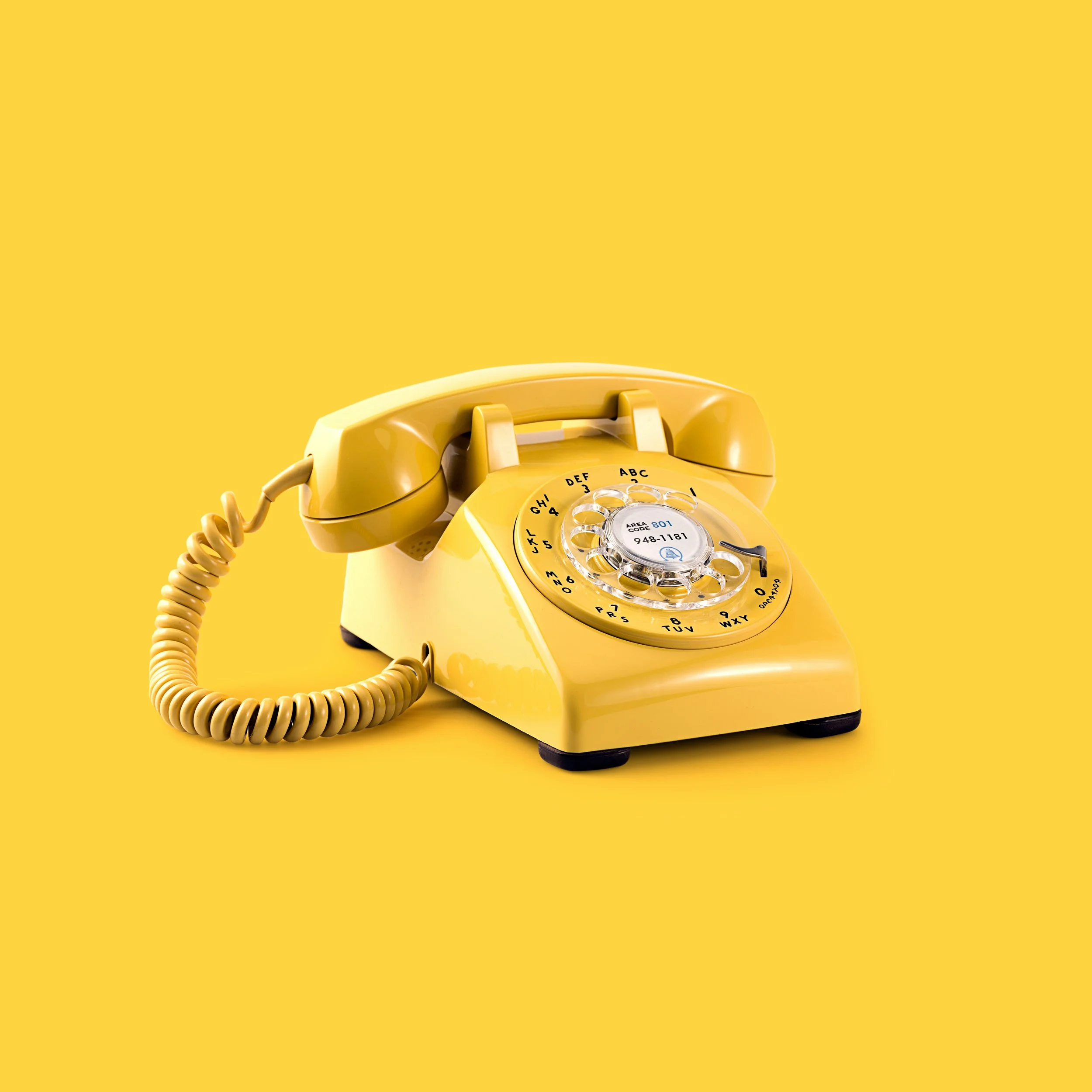
So today, I’m picking up the phone.
Not because something is wrong. Not because there’s a reason. Just because it’s been too long, and too long is reason enough.
If there’s someone you’ve been meaning to call someone whose voice you haven’t heard in longer than you’d like to admit
this is your sign.
Not tomorrow. Not when things settle down. Now.
Pick up the phone.
PICK UP THE PHONE
We schedule everything except the things that matter most